The New-Equipment Myth: Why More Kit Does Not Make a Pastime More Enjoyable
The new-equipment myth makes starting a pastime feel like a shopping project. Learn what gear matters first, what can wait, and how to begin lightly.
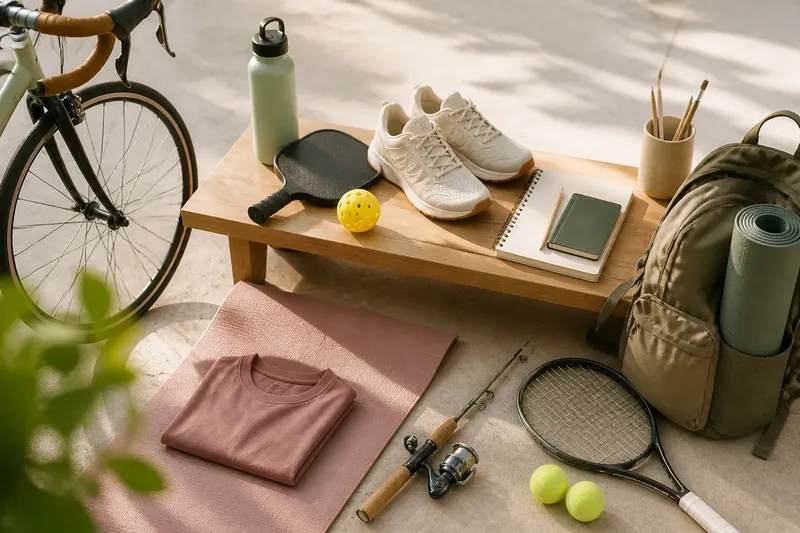
The new-equipment myth turns a first outing into a shopping project: before trying a pastime, people assume they need the full set. That can cost them the useful thing they came for—an easy chance to learn whether the activity fits their day, body, and company. For most casual pursuits, the better question is not what a dedicated participant owns, but what the next session actually requires.
Start with the activity, not its ideal inventory
Equipment lists tend to describe a polished version of a pastime. A recreational tennis player may carry several rackets, spare grips, a ball hopper, and a bag; someone hoping to hit a ball around at a public court may need only a racket that fits comfortably and a few balls. The longer list is not false. It simply answers a different question: what might support regular, committed play?
Separate what makes participation possible from what makes it more convenient. A bicycle needs to be suitable for the surface and intended ride. A casual sketching walk might call for a pencil and a pocket notebook, not a complete drawing set. A beginner at a community pickleball session may be able to borrow a paddle. In each case, the activity itself sets the first boundary.
Write down the actual plan in plain language: “play casually at the neighborhood courts,” “try a short ride on paved paths,” or “join a one-time pottery session.” That sentence keeps purchases tied to a real occasion instead of an imagined future identity.
Sort equipment by what it does
A useful first pass is to put gear into three groups:
- Necessary to take part: the item without which the activity cannot reasonably happen, such as a paddle for a court session if none is available to borrow.
- Necessary for the setting: clothing or simple protection that suits the conditions, such as shoes that feel stable on the surface you will use.
- Helpful after a pattern emerges: extras that reduce inconvenience or support a preference, such as a second racket or a specialized carrying case.
This is a sorting tool, not a universal list. In a studio class, materials may be included in the fee; at a public facility, rental gear may be available; outdoors, weather and local rules can change what is sensible. Check the activity provider’s instructions and the equipment maker’s guidance where either applies.
“Necessary” also depends on access. Borrowing a friend’s gear can be a fine way to try a pastime, but only if it suits the task and is comfortable enough to use. An oversized racket or shoes that slip may turn an otherwise simple first session into a frustrating one. The aim is not to accept anything at hand; it is to avoid buying before a usable option has been considered.
Let fit and handling outrank the feature list
New equipment is often described through features: lighter, faster, adjustable, technical. For a beginner, the practical questions are more modest. Can you hold it without strain? Can you control it at an easy pace? Does it fit the place where you intend to use it? Can you carry or store it without making the outing a nuisance?
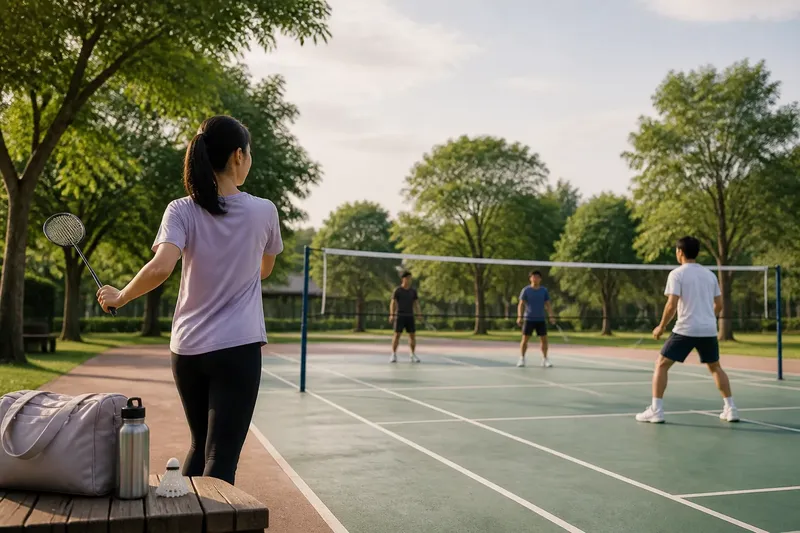
These questions apply across activities. For a first badminton session, a racket that feels manageable in the hand matters more than a collection of advanced specifications. For a casual fishing outing, the rod and reel should suit the kind of water and fishing planned, rather than an elaborate setup intended for a different style. For a beginner’s yoga class, comfortable clothing and a mat that stays put may matter more than accessories intended for poses the participant has not tried.
When comparing options, handle or borrow them if that is practical. At a recreation center, ask whether loan equipment is available and what kind it is. At a local outdoor shop, explain the specific activity and setting rather than asking for the “best” version. A narrow question usually brings a more useful answer: “I’ll use this on a paved path and want relaxed rides,” for example, gives a clerk a clearer starting point than “What bike should I get?”
Use one session to learn what is missing
After a first outing, notice where the equipment interrupted participation. Perhaps a borrowed paddle felt awkward, a bag made carrying supplies cumbersome, or ordinary sneakers lacked a comfortable grip on the court. That observation is more useful than a general feeling that “better gear” would help, because it points to a particular problem rather than a broad shopping urge.
Say you plan to try a beginner pickleball session at a community center, where paddles and balls are available to borrow. You attend in comfortable clothes and bring shoes that feel secure on the indoor court. If the borrowed paddle feels too heavy to control, you can compare a lighter option before buying; if it feels fine, you have learned that a personal paddle is not yet a barrier to another session. The outing has answered a practical question without requiring a complete kit in advance.
Keep the note specific and brief: “The borrowed paddle was comfortable, but I want shoes with a more secure court feel,” is more actionable than “I need proper gear.” It also leaves room for the possibility that nothing needs replacing. Sometimes the missing item is not equipment at all, but a more convenient time, a nearby place to practice, or a friend to join.
Buy for a repeated friction, not a fantasy routine
One purchase can make sense once the same inconvenience recurs. If a borrowed item is consistently unavailable, personal gear may remove a practical obstacle. If an activity becomes part of a regular routine, a durable carry bag or clothing suited to the setting may make getting out the door simpler. The decision rests on a pattern you can describe, not on a promise that new gear will create enthusiasm.
Before buying, name the friction and the item that would address it. “I cannot join when the loan rack is empty” points toward owning the core item. “I dislike carrying loose balls and water” might point toward a small bag, but only if the burden is actually putting you off. If the problem is that the activity feels dull, a new accessory is unlikely to solve it; changing the format, venue, or company is a more direct experiment.
It is not worth comparing tiny material differences or collecting accessories before you know what bothers you. A long review search can feel like preparation while postponing the more informative act of trying the pastime. Keep research proportional to the decision: compare a few suitable options, read care and fit information, and stop when you can explain why one option matches your use.
Questions that help keep the first purchase small?
What equipment do I need to try an activity once?
Start with the item needed to participate and whatever the setting requires for comfort or protection. Ask the facility or organizer about rentals, loan gear, and included materials before purchasing anything.
Is it better to rent, borrow, or buy?
Renting or borrowing can make sense when you are unsure whether the pastime suits you, provided the available item fits the activity and feels usable. Buying becomes easier to justify when access is unreliable or a specific feature repeatedly affects your enjoyment.
How do I know if beginner gear is good enough?
It is a reasonable starting choice if it matches the activity, setting, and your comfort, and lets you participate without a recurring practical problem. “Beginner” should not mean unsuitable; check fit, condition, and intended use rather than assuming a low-feature item will work.
When should I upgrade my equipment?
Consider an upgrade when you can identify a limitation that appears repeatedly and a replacement would address it. If the current item remains comfortable and functional for your chosen version of the pastime, a more advanced model may add complexity without changing the experience much.
Keep the threshold for joining low
A pastime is easier to begin when the first decision is small. Look for a try-it session, a rental counter, a community program, or a friend willing to lend suitable gear. Those options do not need to become a permanent arrangement; they simply let you judge the activity before deciding what deserves a place at home.
The new-equipment myth fades when gear returns to its proper role: useful support for an activity you have chosen, not an entry fee to prove you belong. Start with what the next outing calls for, then let repeated experience—not an imagined ideal setup—tell you what to add.
Before leaving home, check one quiet detail: where the item will go when you return. A racket that has a simple place to rest, or a notebook that can stay beside your everyday bag, is easier to use again than gear that immediately becomes a storage problem. That small bit of practical fit can matter more than another feature on the label.