The Whistle at the Game: A Short History of a Familiar Signal
The history of the game whistle is less about one invention than changing uses, from recognizable calls in play to a familiar tool for officials.
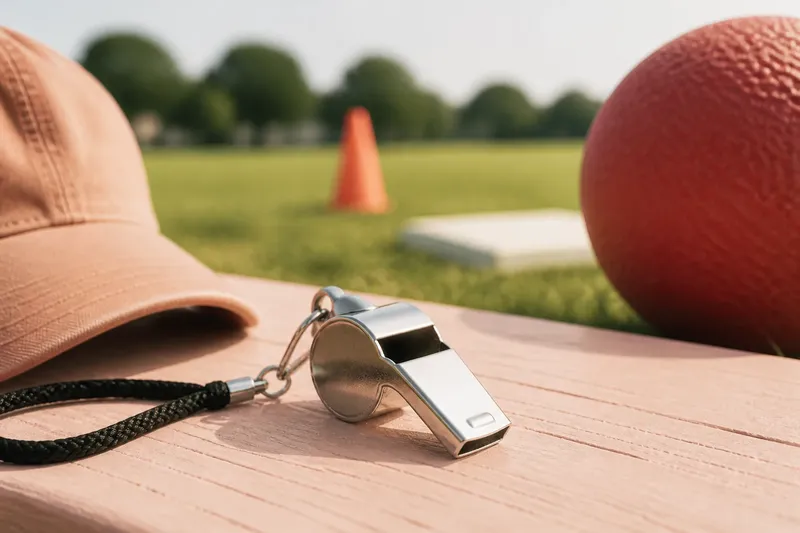
The common mistake in telling the history of the game whistle is to begin and end with the referee. That narrow account misses how a small, portable sound became part of everyday play: a way to start a race, call a break, or gather a scattered group. Its story is not a single invention followed by universal adoption, but a changing role in recreational life.
The history of the game whistle begins with a useful sound
Whistles make a sharp tone without requiring the caller to shout at length. That quality suited outdoor games, where players might be spread across a field and conversation could be lost in movement and surrounding noise. A whistle was not necessary for every activity, but it offered leaders and participants a compact way to make a call audible beyond the nearest players.
There is no single origin story for the whistle as a tool in recreation. Whistles existed in different forms and for different purposes, and their adoption into games happened in particular settings rather than by one universal rule. The safest account is therefore about use: as organized play acquired clearer roles and procedures, a whistle could make a signal easier for a group to hear.
Rules and officials gave the whistle a public role
In games with an appointed official, a whistle could mark the moment when play stopped or resumed. It gave a ruling an audible edge: players did not have to rely only on a raised hand or a shouted instruction, and spectators could hear that the action had changed. The sound itself did not create authority; the rules and the official’s recognized role did.
This association became especially familiar in field sports, where a referee or umpire had to address players across open space. The whistle’s place in those games reflects a practical match between a portable signal and an activity with shared rules. It does not mean that every game used the same calls or that every whistle carried the same meaning.
Local games made the signal their own
Outside formal matches, whistles have served less ceremonial purposes. A camp counselor might use one to call a group in from a field, while a playground leader might use it to mark the end of a round. These uses belong to the social history of recreation too: the sound is adopted because a particular group finds it convenient, then shaped by local habit.
That distinction matters. A single blast does not naturally mean “stop,” “come here,” or “switch teams.” The people playing must learn what it means in that activity. A visitor arriving midway through a game may not know the convention, even if the signal seems obvious to regular participants.
Why does the whistle still appear in games?
Why is a whistle useful outdoors?
It can carry a brief signal across an open playing area without a long spoken instruction. Its usefulness depends on distance, surrounding sound, and whether participants already know what the call means.
Does every sport use the same whistle signals?
No. Rules and conventions differ among sports and groups, so a sound used to stop play in one activity may have another meaning elsewhere. Players should follow the rules and explanations for the game they are joining.
What does a whistle mean in an informal game?
It means whatever the group has agreed it means, if anything. Before play, a leader can state the signal’s purpose and pair it with a visible gesture so newcomers are less likely to mistake it.
Is a whistle necessary for a casual game?
No. A spoken call, raised hand, or other agreed cue may work better for a small group playing nearby. A whistle is useful only when its sound suits the setting and participants can distinguish it from other calls.
A short agreement keeps a game whistle from becoming noise
For a recreation group considering a whistle, the practical question is not how many calls it can make, but whether people can recognize one clear signal. Say a neighborhood leader is starting a casual kickball game in a park. The starting inputs are players spread between the bases and home plate, a single whistle, and no established signal. The leader says that one short blast means “stop and look toward home,” then demonstrates it with a raised hand. During play, the leader uses that call; players stop and turn toward home, making the signal’s expected result visible. If some players cannot hear it, the leader can move closer or use the raised hand rather than adding a second sound whose meaning is not yet familiar.
- Check whether players can hear the whistle from their usual positions; if not, move closer or use a visible hand signal instead.
- Check whether everyone can state what one short blast means; if not, explain and demonstrate the call before play, or choose a simpler spoken cue.
- Check whether another nearby activity is also using whistles; if the calls could be confused, use a distinct visual signal or a spoken call.
- Check whether newcomers have heard the agreement; if not, explain it before they join, or keep the activity paused until they understand.
- Check whether the call is being used for more than one purpose; if players interpret it differently, reserve it for one action and use a separate clear gesture for the other.
- Check whether play actually pauses when the signal sounds; if it does not, clarify the expected response and confirm everyone is ready, or stop using the whistle until the group can hear and understand the cue.
It is not worth building an elaborate code of short and long blasts for an informal game if participants have to remember several meanings while moving. One explained call, paired with a visible gesture, is often easier to follow than a pattern that demands interpretation during play.
The whistle’s history is also a history of shared play
The game whistle has moved among roles: a practical call in recreation, a recognizable mark of an official’s authority, and a familiar signal for groups that need to change what they are doing. Those uses are related, but not interchangeable. The sound works only within the activity and conventions that give it meaning.
For anyone joining a game, the useful question is simple: what does this whistle mean here? Asking before play begins can prevent a familiar sound from producing an unfamiliar response—and leaves more attention for the game itself.